We Wear the Mask
I'm Still Here“We Wear the Mask,” Paul Laurence Dunbar’s poem, gives Austin language for the divide between her outward presentation and what she keeps private. First encountered in a high school poetry unit, it becomes more than a classroom text: its mask returns later as a way to understand both racial self-protection and the personal cost of containing anger.
The Classroom Encounter
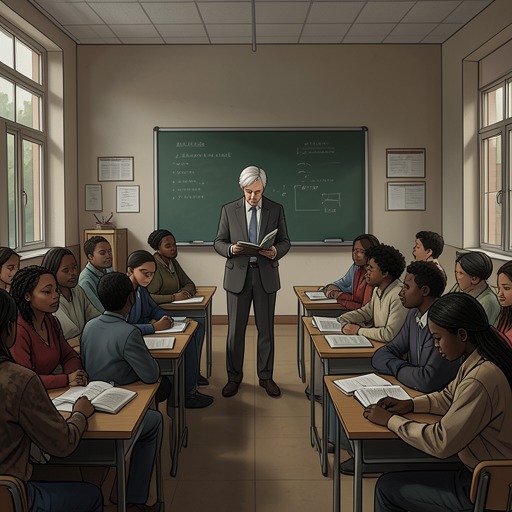
Austin’s freshman English teacher, Mr. Slivinski, broke from the textbook for a poetry unit in which students marked up poems and considered their language, structure, and effects. When he distributed Dunbar’s poem, Austin recognized the author’s name from poems her stepmother, a high school English teacher, had recited to her. She expected a poem about the Black experience, but the encounter still startled her. Its lines ask why the world should count Black people’s tears and sighs, then turn to the image of being seen while wearing a mask.
The poem immediately made Austin consider how often she concealed parts of herself around white people, including those she counted as friends. She felt the difference between being the only Black girl in class and being among other Black people at the lunch table or in gospel choir. When she finished reading, she felt both relieved and saddened: the poem had named something she recognized, and she wondered how Mr. Slivinski understood it.
Privacy and Recognition
As discussion began, Austin folded herself into her chair, trying to make her body smaller and disappear. She feared being asked to explain the poem to an all-white class or speak for Black people. The poem’s recognition of her experience felt deeply gratifying, but that recognition did not make her willing to share a vulnerable part of herself. For Austin, the mask was not simply a literary image to interpret; it was bound up with survival and with the question of whether the classroom was safe enough for disclosure.
She also describes the broader pressure on Black students in mostly white classrooms to become the room’s race experts. Students and teachers may expect a Black child to explain what Black people think, though no individual can speak for an entire group. Austin’s immediate response was simpler than that analysis: she did not want to take off the mask. Mr. Slivinski did not call on her. Although they had not exchanged a word during the exercise, she sensed that he respected her choice to keep her thoughts private.
White students offered interpretations that Austin admired for their intelligence and creativity, but she believed they could not know the experience the poem named. Mr. Slivinski continued to challenge them without making Austin a substitute teacher for the moment. His handling of the discussion earned her trust: the class could address race rather than ignore it without making her disclosure the price of doing so. The episode makes the poem’s significance social as well as personal—the mask marks a boundary, and a teacher’s respect for that boundary makes honest discussion more possible.
The Mask Returns as Anger
Years later, Austin returns to Dunbar’s poem while considering the anger she had kept below the surface. She wished she could be as bold as Zora Neale Hurston, Nina Simone, or Angela Davis, rather than mild-mannered. The poem’s image recurs in the blunt recognition that “Austin wears the mask that grins and lies.” In this later context, the mask is not only a means of withholding private experience from a classroom; it also names the emotional performance through which Austin tried to remain acceptable and composed.
Instead of expressing anger, she tried to communicate pain, disappointment, and sadness, exposing her wounds in the hope that listeners would respond. She thought this approach followed James Baldwin’s advice not to be destroyed by rage, but came to see that she had been denying and covering the anger rather than reaching its source. She remembered a young Black woman on a bus in the South stating her rage clearly and calmly despite the feelings of others there. Austin recognized the contrast: she had been more afraid of her own rage than she understood.
Meaning and Consequence
The poem links Austin’s early instinct to protect herself in a white classroom with her later recognition that emotional self-control can become self-restriction. She had tried to be the wise, patient teacher and the composed, apparently unbothered person, standing on something like moral superiority. She ultimately understood these poses as versions of the mask, not proof that anger had disappeared. Her conclusion that she had left her humanity at the door gives the image its sharpest consequence: a strategy that can help a person survive others’ scrutiny may also limit what that person permits herself to feel and express.